
2026
Migraine Neurodiversity
How to Discover Your Migraine Identity and an intro to the Energetic Soup that Launches the Attack
Buy digital book ↗Presented by Lynn C. Turner, MPH
a collection of books and media companions with new discoveries regarding the causation of migraine and individual migraine identities
Explore the books Explore the Companion Site
The bookshelf
2026
How to Discover Your Migraine Identity and an intro to the Energetic Soup that Launches the Attack
Buy digital book ↗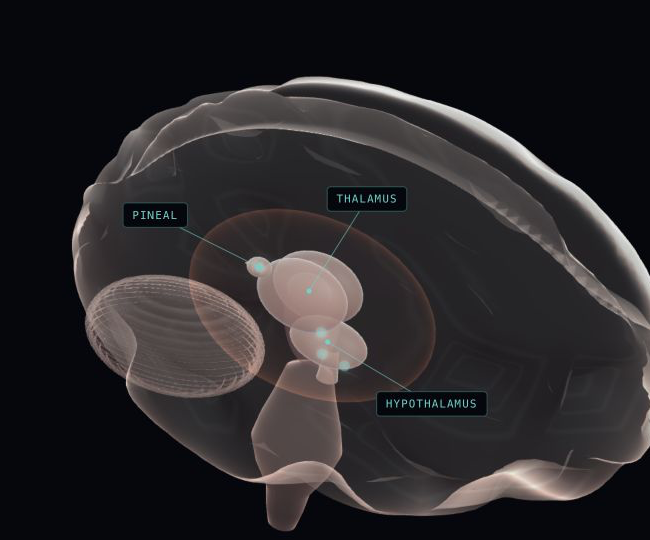
2026
A static, interactive migraine companion. It visualizes the companion's hypothesis that a migraine can begin when an "energy force" enters a deep-brain **Prodrome Zone** at a specific **angle** — different angles striking different structures and producing different prodrome (pre-migraine) symptoms.
Explore Companion Site ↗
2024
After decades-long experience of the periodic ravaging of migraine, Turner takes the readers through a most unusual journey. Turner develops a unique theory of the ‘prodrome zone’ in the brain and suggests causes igniting this neural storm. Turner provides the readers with a synopsis of migraine and treatment through the ages. Finally, Turner connects the prodrome zone with the new hope for migraine. This stunning voyage is propelled by hope that everyone can get to “the wonderful place on the other side of migraine.” A tremendous body of work, “On the Other Side of Migraine” offers hope for the future of migraine. It is for people with migraine, people who love people who have migraine, and researchers searching for answers.
Buy the book ↗
1993
Migraine headache may lend itself to epidemiological inquiry that includes disruptive serotonergic psychosocial behaviors. To advance our knowledge of the etiology of this neurologic disorder, measurable psychosocial behaviors that are correlated with variability in monoamine neurotransmission need to be examined in the migraine population in a controlled fashion. It may be that those with migraine have a more difficult time adapting to internal or external environmental changes based on a different distribution of serotonin levels or activity. Psychosocial behaviors are outlined as possible serotonin indicator variables for future migraine investigation.
Read the Article ↗
1995
We conducted an investigation of migraine headache in a general population of Mexican-Americans living in San Diego county. Specific headache triggers were reported and analyzed, the most frequently reported for females with migraine being missing meals (58.9%), weather changes (54.4%), menstruation (53.6%), post-crisis letdown (52.7%), and fatigue (51.8%). The most frequently reported trigger factors for migraines reported by males were fatigue (58.8%), sleep (as a precipitating factor) (56.3%), post-crisis letdown (41.2%), and weather changes (37.5%). Trigger factors were further evaluated using stratification by presence or absence of Raynaud's phenomenon (RP), menstrual migraine, family history of migraine, and by migraine type. Odds ratios and 95% confidence intervals were calculated. These results suggest that subjects with migraine and RP (perhaps indicative of a systematic vascular tone disorder) and those with menstrual migraine (indicative of sensitivity to hormonal changes) may overall be more sensitive to certain environmental stimuli, particularly those involving change in the internal environment.
Read the Journal Article ↗
1994
To provide a reliable instrument for use in large population surveys, we developed a short questionnaire based on existing International Headache Society diagnostic criteria and administered the questionnaire to 50 consecutive patients seeking evaluation at a university-based headache clinic. A single neurologist subsequently examined all patients. Based only on the questionnaires, reviewers scored each patient as having migraine with aura, migraine without aura, or nonmigrainous headache. High predictive validity and low interobserver variability between the examining neurologist and the independent reviewers suggest that the questionnaire may be quite useful as a survey instrument.
Read the Journal Article ↗Disclaimer: I am not a licensed physician and this information is not medical advice. Anyone experiencing headache or prodrome-like symptoms should consult their doctor or other qualified medical provider for evaluation, diagnosis, and treatment.

Get in touch